Showing posts with label Life Cycles. Show all posts

Tuesday, August 13, 2024

Understanding the Life Cycle of a Church

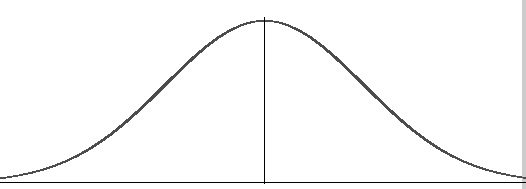
In many of the conferences I've led for pastors I address the life cycle experienced by churches. Using a standard bell curve, I explain how churches go from birth to maturity to plateau to decline to death. I show how each of us personally are on a similar life cycle, and there isn't anything we can do about it. It's a natural process of life. However, churches can do something if they find themselves on the declining side of the life cycle. They can begin a new life cycle. 

The best place to begin a new life cycle is when it's still on the left side of the bell curve during the maturing or growth stage. However, many churches are not eager to change anything at that stage because things are going so well. The church is growing, new people are attending, baptisms are strong, the giving is up and people are excited about the church. Why change anything at that stage is a question often asked.

Well, for one thing, churches don't stay at that stage forever. It's great while it lasts, but at some point the church will begin to plateau or feel stuck. From that point the church enters a decline period which can soon lead to a survival mindset. When that happens the church becomes very risk-averse. They are protective of their finances. They circle the wagons fearful that they may be forced to close. Too often, that becomes a self-fulfilling prophecy.

One of the problems is that many churches enter the decline side of the life cycle and never realize it until they are far down that right side of the bell curve. Drastic action may have to be taken if the church is to survive, and that doesn't include circling the wagons. It involves becoming more aggressive about outreach and discipleship. It requires the church to become much more intentional about its ministries and forces them to eliminate those ministries that no longer produce results (which they should have done much sooner). It also forces people out of the mindset that if they just doing the same things that used to be effective, and do them harder, everything will be OK.

How do you start a new life cycle? You do it by starting new ministries. You seek God's vision for your church and begin to live into that vision. Your church may be 100 or even 200 years old, but essentially you are starting over again. You identify the persons God wants your church to reach, eliminate anything that will keep you from that and begin new ministries that will reach those individuals.

I live in a county of only about 32,000 people, but I keep seeing new churches pop up in rented spaces and business centers. While many of the churches in my community are dying, these new churches are thriving. God is still interested in seeking and saving those that are lost, and if the existing churches are not going to do that, He will raise up new churches that will.

Your church leadership should look at a bell curve. Start at the left side and write birth on the bottom. As you move up the left side write growth. When you get to the top write plateau. As the curve begins to move downward, write the word decline, and at the bottom write the word death. Where is your church on that bell curve? Where is it in it's life cycle? Be honest. What are your next steps?
Tuesday, September 8, 2020

The Life Cycle of a church

Churches, like all of us, have a life cycle. We are born, we grow and mature, we reach a plateau stage, we begin to decline until we finally die. It might help to show the life cycle as a bell curve. The maturing and growth of the church is found on the left side of the curve while the decline side is on the right side. We read today that 80 percent of the churches in North America are on a plateau or declining. However, if you notice, the plateau is a rather small area leading me to believe that most of these churches are in decline.

Plateau

Normal Distributions (Bell Curve): Definition, Word Problems - Statistics  How To

                  Birth                                                                                                                    Death

Unlike us, churches do not have to follow this life cycle. Although approximately 100 churches close their doors each week in America, churches do not have to die. At any point a church can begin a new life cycle. A church creates a new life cycle for itself when it begins new ministries designed to reach new people for Christ. Although a new life cycle can begin anywhere in the current life cycle, the best place to begin one is on the left side before a church reaches a plateau. Once a church starts down the decline side, and especially if they are far down that side, they become very risk averse. These churches want to protect what resources they have in an effort to keep their church alive and may not be willing to spend those resources on new ministries.

Unfortunately, it's also not easy to begin one on the left side. On the left side of the life cycle the church is growing. Things are going well. Developing new ministries requires change in what the church is doing, and why would anyone want to change something that is working so well? We've all heard, "If it isn't broke, don't fix it." I have a new slogan: "If it isn't broke, break it because it's going to become obsolete soon anyway." What got you here won't get you where you want to go in the future. The world is changing too rapidly for anyone, including churches, to rest on what has worked in the past. To be successful, individuals have to reinvent themselves and commit to personal growth and lifelong learning. The same is true for churches.

Every church began because someone had a vision for a church in your community. New life cycles for churches begins out of a vision for new ministry. Someone recognizes a ministry need that exists in your community and a vision is formed that will address that need. Perhaps someone else has a vision for another ministry need and a second new life cycle begins. Churches can start numerous new life cycles allowing the church to stay on the left side of the curve, and more importantly, reaching people for the Kingdom of God.

Where is your church on this life cycle? Management guru Max DePree has written that the first responsibility of a leader is to define reality, so be honest with your answer. If your church is on the left side, what can you do to ensure you stay on that side? If you determine that your church is on the decline side, what needs to change? How can your church begin a new life cycle that will bring encouragement to the church and transform the lives of those you serve?

Monday, January 27, 2020

New life cycles in churches

I often show the life cycle of a church as a bell curve. At the base on the left side you have the birth of the church. As one goes up that side is the growth phase, and at the top is the plateau phase. As you begin to move down the right side of the curve you enter the decline phase until you eventually get to the bottom which represents death. In my pastor seminars I point out that this curve is just like the one each of us experience in our personal lives. We are born, we grow, we reach maturity, we begin to decline until we die. There is nothing you and I can do about our life cycle, but there is something a church can do about its cycle. It can begin to grow a new life cycle.

This new life cycle can begin anywhere on the curve, but the best place is on the left side (the growing side), but it's also the most difficult place to try to begin a new life cycle. On that side things are going well, the church is growing, so why begin changing things? The reason is that eventually, if things do not change, the church will find itself on the decline side. At this point many churches become very risk-averse They may be in a survival mode unwilling to try anything that might deplete whatever resources they have.

A new life cycle may start with a new ministry that comes as God gives the church a fresh vision for ministry. It may begin with renewed leadership, both pastoral and lay. It certainly won't happen unless there is a fresh outpouring of the Holy Spirit upon the congregation. The good news is that new life cycles can come from any of these and can be repeated as often as necessary to prevent the church from ever entering the decline side.

When I began my pastoral ministry in 1981 the church was in trouble. It was certainly far down the decline side. God was very gracious to a young, inexperienced pastor and the church he had been called to lead. We began to see new life cycles form in the life of the church. Positive things were happening. After a few years of growth we began to find ourselves stuck again. About that time I read a book that basically said that if the church was stuck it needed new pastoral leadership. That bothered me because if it was true then I might need to leave the church, and I felt no guidance that it was God's will for me to do that. After much prayer I decided if the church needed a new pastor, then I would become that new pastor. I would have to reinvent myself as the pastor of the church which I began to do. I realized the church was stuck because I had become stuck. In time, we got unstuck and began to do new things once again. We enjoyed exciting ministries during my remaining years as pastor of that church.

In my post last week I wrote about the benefits of planting new churches. There is also great value in replanting existing churches. In a sense, that is what we did in the church I pastored even though that language was not in use at the time. At least I wasn't aware of it. Since then I came across a book that was not available when I pastored that I wish I had. It is Replant: How a Dying Church Can Grow Again by Mark DeVine and Darrin Patrick. I believe it can be a great resource for church leaders who recognize that their churches need to experience new life.

If your church is stuck or even dying, it's time to consider a replant. Your church can start a new life cycle. It may not be easy, but it can be done. It has been done in many churches across the country, and there's no reason it can't be done in your church.

Thursday, May 19, 2016

Healthy churches needed to advance the Kingdom of God

Since the publication of my book The Healthy Small Church: Diagnosis and Treatment for the Big Issues I've had the opportunity to lead several conferences and workshops for numerous denominational groups. I've responded to many emails from pastors with questions about how to help their churches become healthier. Church health is very much on the minds of many Christian leaders today. This is probably why this is the best selling book of all I've written.

A few years ago one judicatory evaluated each of their churches based upon the health of the congregation. They found that the majority of their churches would be classified as unhealthy. Only a few were rated as very healthy with the remainder somewhere in between. Helping their churches become healthier became one of their goals.

Every church has a life cycle that can best be represented by a bell curve. The top of the curve represents a church on a plateau. As the church begins to move down the right side of the curve it slowly becomes unhealthy and goes into a decline. Health can be restored to a church anywhere in its life cycle, but the further it goes down the right side the more difficult it becomes to help it become healthier. It will finally reach a point on that right side when its main goal is survival, and it will then be very averse to doing anything that might help it regain health.

The goal of a church leader should be to address health issues on the left side of the curve when the church is growing. Even then it may begin to develop some symptoms of disease. but the earlier these symptoms are detected the easier they are to correct.

What the book does, and what I do in the seminars based upon the book, is to identify some of those symptoms and share ways to resolve them. In the final chapter of the book I list several diagnostic questions to help church leadership give their church a check-up. I recommend that the pastor and leaders work through those questions each year to give their church an annual check-up. Again, the sooner problems are found the easier they are to correct.

The good news is that any church can become healthier than it is today. A healthy church will be more apt to be a growing church. It will have a more outward focus which means it will be more involved in ministering to its community. A healthy church will accomplish much more for the Kingdom of God than an unhealthy church will. The Kingdom and our world needs every church to be a healthy church.

Friday, February 26, 2016

Healthy churches need to change

Most of us are familiar with the saying that "If it ain't broke, don't fix it." Unfortunately, that is not always good advice today. A better statement might be "If it isn't broke, break it. It's going to be obsolete soon anyway." Things continue to change so rapidly these days that many of the things you are doing today that make you successful will actually harm you in the future.

Many healthy organizations struggle with such change. Many of them took years (maybe decades) to enjoy the health they now have. It's frightening for a healthy organization to think of changing what seems to be working so well. This is especially true for healthy churches. Churches don't enjoy change very much anyway, so why begin changing things in a healthy church that is currently enjoying good ministry?

It's an honest question. For years I've known that healthy churches need to experience regular change, but I've always struggled to give an adequate answer to those who asked why. I was greatly helped this week as I read Less Is More Leadership: 8 Secrets to How to Lead & Still Have a Life by H. Dale Burke. He explains that healthy churches need to change because

  • our world is constantly changing.
  • our mission is yet to be accomplished.
  • our people are constantly changing.
  • every new generation is a new challenge.
  • change is easier when you are healthy, not unhealthy.
  • Scripture gives us our functions, but not our forms.
  • flexibility should be the norm if we value people over programs.
  • creativity should also flow from the children of the Creator.
  • the church is a body, a living organism, and a body must change to grow.
  • every church or ministry has a natural life cycle and will eventually die unless it is "reborn" from within.
Each of these are valid points. The one that resonated most with me was the last one about the life cycle of churches. This is an illustration that I often use in various presentation. A church will go through a normal life cycle of birth-growth-maturity-decline-death. Although it cannot reverse that cycle, it can begin new life cycles and see it's ministry "reborn" from within. New life cycles can begin at any time, but if a church waits until it is well down the decline side of the cycle it become much more difficult. By this time a church is often so concerned about its survival that it is reluctant to do anything that might threaten that survival. Change will be strongly resisted in most churches well down the decline side.

The growth phase is the best place to begin new life cycles because the church is the healthiest at this place. It feels less threatening to take risks and attempt new ministries. The leaders of healthy churches should be regularly identifying new ministry opportunities that will bring new life cycles for the church. Not only does this bring new life into the church, it takes ministry to new people and continues to advance the Kingdom of God.